

Established as one of the leading female directors in the independent film scene, Sofia Coppola, with her eye for the whimsical and the melancholy, has positioned herself on the altars of worshipping teenage ‘sad girls’ around the world. Highlighting many of her stories on young women and the complicated beauty of the female teenage experience in flicks like The Virgin Suicides (1999) and The Bling Ring (2013); Coppola’s work engages with an audience desperate to romanticise their lives through social media. Most recently on apps such as TikTok. Although, the very complex notion of a ‘sad girl’ has been popular on internet sites such as Tumblr for years now. Allowing a safe space for young women to engage with their femininity in a beautiful yet depressing aesthetic.
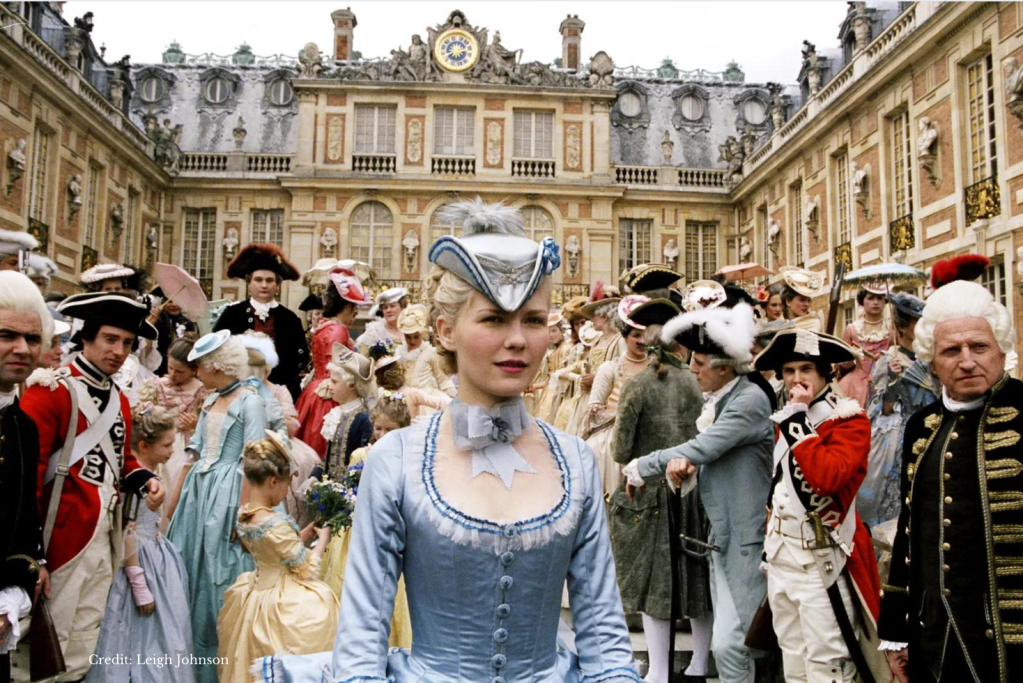
In 2014 the ‘sad girl’ was wearing fishnet tights and posing with mascara artistically running down her cheeks. Often posted on their Tumblr dashes to the backdrop of Lana Del Rey and Lorde, the documentation of this beautiful sadness was profoundly fuelled by filmmakers like Coppola and her vision of the hyper-feminised Lisbon sisters. The iconography of her filmmaking has become a staple of the culture; if you were to step back in time and navigate the average teenage girl’s social media you’ll almost certainly be faced with a screencap of Kirsten Dunst laying under the pale blue night. The release of the cult classic The Virgin Suicides began Coppola’s trailblazing filmography as well as her working relationship with Kirsten Dunst. The pair’s dynamic remains at the heart of the best received of Coppola’s films. Simply allowing Dunst’s natural likeability to shine through the screen is the fundamental success of Marie Antoinette (2006) as she embodies the controversial queen of France with a charm that renders audiences acquiescent to her story. The youthful glow of the central performance appeals to the heart of the ‘sad girl’ internet subculture, positioning the very image of Marie breaking down in her gold-adorned bedroom in Versailles as another heavily reposted screenshot.
Though Marie Antoinette remains my personal favourite Coppola film, I have grown to greatly appreciate The Beguiled, her 2017 Civil War-era Southern Gothic based on the book by Thomas P. Cullinan. With a fantastic cast including Kirstin Dunst, Colin Farrell and Nicole Kidman (to name a few) as well as a deliciously atmospheric tension that only escalates as the run time draws on, the film feels like a more mature Coppola picture as she divulges headfirst into the suspense genre while retaining her principle artistic presentation.
The staple beautiful visuals of a Sofia Coppola picture has the ability to inspire the adoration of all of the audience, however, it is the ‘sad girl’ who responds most overtly to them. The modern-day ‘sad girl’ who reads Sally Rooney and most probably listens to Phoebe Bridgers or Mitski at maximum volume, still somewhat engages with Coppola despite her recent divulgence from teen centred stories. Her latest film On The Rocks (2020) sees Coppola centre more overtly on themes of maturity, following on from the examination of early twenty-something life in Lost in Translation (2003).
Though Coppola’s modern films may not have as much of an iron grip on the modern ‘sad girl’ aesthetic, her melancholically beautiful style still lingers in the space. Alongside this and her consistent focus on female experiences, there will almost always be a young woman watching a Sofia Coppola flick with her mouth slightly parted and exclaiming “she’s just like me.”
 Spotlight Magazine
Leave a comment