
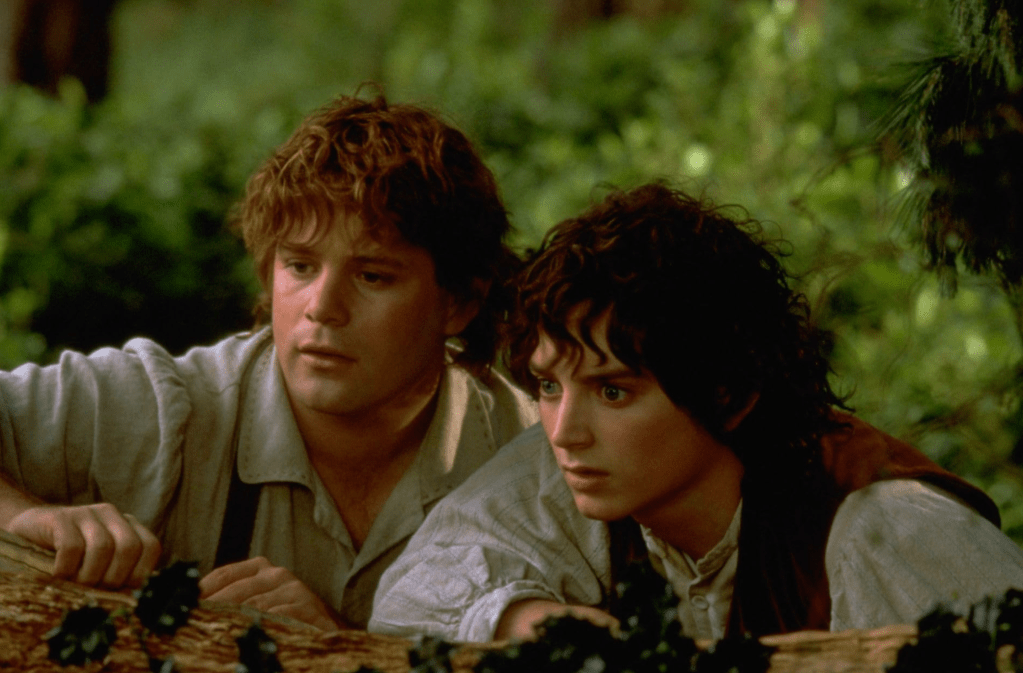
As the winter months passed, I, like many others, embarked on my annual marathon of The Lord of the Rings trilogy (Jackson, 2001-2003), even if only to procrastinate my upcoming deadlines. This got me thinking: the modern world is a chaotic place, marked by the stress of deadlines, the sky-high cost of living, job insecurity, sleazy politicians, climate change, and what feels like never-ending wars around the world. This sense of turmoil is reflected in the Doomsday Clock, which now sits at 89 seconds to midnight, signalling that we are at our closest point ever to human extinction. Now more than ever, in this space of societal unrest, there is a longing for escapism— not just to another place, but to a different universe. A nostalgia for a past we have never experienced, a longing for simplicity and stability: anemoia.
Within this idea of anemoia – ‘nostalgia for a time or a place one has never known’ – the beauty of The Lord of the Rings flourishes. In a modern world shaped by rapid innovation and the self-centred drive for individual profit, Hobbiton evokes a nostalgic twang for the modern audience, providing a world audiences can escape into, vicariously experiencing the pastoral idyll of community and the humble pleasures of life, such as eating, drinking, and partying. Peter Jackson’s cinematography paired with Howard Shore’s jolly score creates a warm tableau that inspires a longing for simple tranquillity, where life’s stresses amount to pesky relatives and neighbours.
However, whilst seeking to embrace the security of simplicity, the audience is faced with the protagonist, Frodo, as he embarks upon his quest to leave the Shire and face the challenge of evil manifest in Sauron. As Frodo, along with the unwavering loyalty of his companion Sam, battles against beasts, ghouls, giant spiders, and orcs, our own struggles with modernity are mirrored. Whilst our conflicts are not as dramatic, they are nonetheless just as significant; his burden, encapsulated in the physical weight of the One Ring, is analogous to the invisible burdens we carry, be that financial struggles, mental health challenges, or existential uncertainties. In these instances, we are reminded of Sam’s wise words: “There’s some good in this world, Mr. Frodo, and it’s worth fighting for.” In today’s fractured society, when cynicism and nihilism can feel overpowering, the unwavering belief in goodness and the triumph of resilience over despair is a powerful antidote. Though in Middle-earth we find shelter from the lived realities of our external world, we must take inspiration in the endeavour to overcome our challenges when we too, much like Frodo, exit the Shire and embark on our own voyage through life.
The impact of Frodo’s journey on the modern audience is not simply expressed through the various challenges he faces, but reflected in the spectacular scenery the fellowship encounters. These include the phenomenal shots of the green and rugged landscape grounding the trilogy, the vast castles of Minas Tirith and Helm’s Deep, the ruins of Osgiliath, or the unnerving Mines of Moria. These fantastical settings anchor the trilogy in a medieval stasis in which the worries of the modern world, shaped by technology, politics, and social expectation, fade into irrelevance. This stasis contributes to the deep sense of anemoia that The Lord of the Rings evokes, transporting audiences to a world untainted by modern disillusionment. For example, though unsightly skyscraper tower blocks and minimalist architecture now litter our cities, Minas Tirith, with its grandiose white stone and intricate carvings, embodies the lost grandeur of an era where craftsmanship and tradition took precedence over efficiency. Similarly, the elves of Rivendell encapsulate an ethereal, almost timeless beauty in which wisdom and serenity prevail over the frantic pace of present-day life, underpinned by the majesty of Howard Shore’s “Rivendell” score. In these landscapes lies not just visual splendour, but a psychological sanctuary.
In essence, the enduring appeal of The Lord of the Rings lies in its ability to offer both an escape and a reflection. It transports audiences to a world seemingly untouched by modern afflictions while simultaneously engaging with timeless struggles that remain deeply relevant. Whether through its pastoral depictions of Hobbiton, its grand medieval landscapes, or its exploration of endurance, the trilogy taps into our collective longing for a world where simplicity, honour, and community take precedence. As the Doomsday Clock inches ever closer to midnight, Tolkien’s world, brought to life by Peter Jackson’s cinematography and Howard Shore’s magical score, elicits an almost painful nostalgia for the comforting embrace that is the world of Middle-earth.
 Spotlight Magazine
Leave a comment