
One of the first films to demonstrate the expansive value of technicolour, The Wizard of Oz (Fleming,1939) is a foundational piece of American cinema. It has notably re-entered the public consciousness this year after the release of Wicked in November 2024, though arguably it never really left. Maintaining a lasting influence throughout cinematic history, the film has inspired many different directors. Perhaps the most significant amongst them is the late David Lynch who sadly passed away this January.
For Lynch, The Wizard of Oz was a constant source of inspiration, the director once claiming that there wasn’t a day where he did not think of the film. When describing what it meant to him, he said “The Wizard of Oz is like a dream and it has immense emotional power. There’s a certain amount of fear in that picture, as well as things to dream about. So it seems truthful in some way.” This dreamlike quality he identifies seems to underpin most of his own work. His films certainly seem to work to the logic of dreams, or more accurately nightmares. They tap into the unconscious in a way that often seems more truthful than any attempt to replicate reality.
Beyond thematic comparison, there is a lot of imagery that alludes to The Wizard of Oz in Lynch’s work. Stage curtains, for instance, appear in almost every one of his films, from the blue curtains that make up the opening credits of Blue Velvet (1986) to the iconic red curtains of Twin Peaks (1990). Though it is futile to try and explain the reasoning behind any of Lynch’s decisions, these curtains do seem to mirror those that the Wizard is revealed to be behind in The Wizard of Oz.
In Wild at Heart (1990) The Wizard of Oz is directly referenced throughout. Lula’s mother, for example, takes on the character of the Wicked Witch of the West, appearing at one point as an apparition with green skin atop a broomstick. Other obvious nods include Lula’s red slippers, Sailor’s encounter with the “good witch,” and lines of dialogue such as “Too bad he couldn’t visit that old Wizard of Oz, and get some good advice.” These well known references act as a sort of anchor for the audience, guiding them through the outlandish romantic road film.
However, Lynch’s obsession with the Wizard of Oz seems more fundamental to his work than a simple device from which the audience can decipher complex content. Something which seems to be apparent in all his films is a decided lack of cynicism. Like Dorothy, many of his protagonists possess a certain innocence, experiencing the worlds they are dropped into with an equal sense of wonder and horror. Comparing Dale Cooper’s experience of Twin Peaks with Dorothy’s experience of Oz, both characters seem to approach their ordeal with full sincerity, the audience never doubting whether their intentions are good or bad.
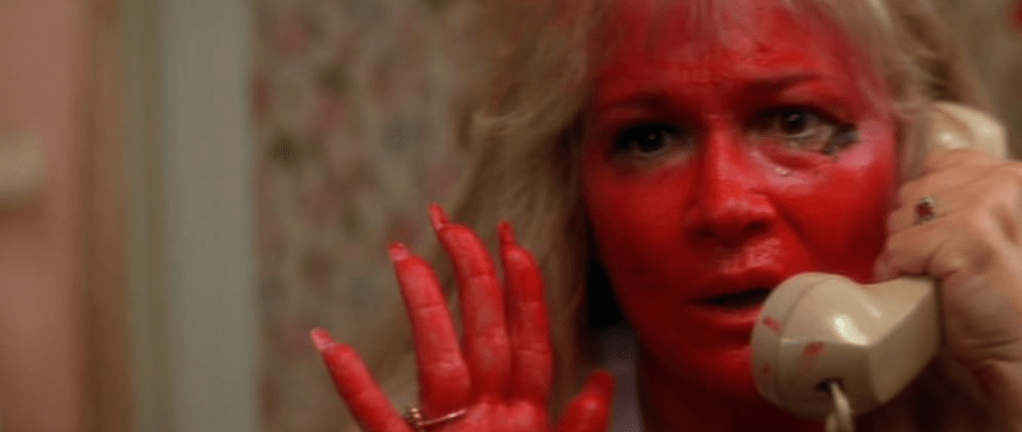
This is not to say that either work shies away from the darkness or complexities of the world. As Lynch has identified, there is a certain amount of fear that lies within The Wizard of Oz, with characters like the Wicked Witch of the West being genuinely terrifying and grotesque. The story at the heart of the film is also essentially one of corruption, a theme Lynch’s work deals with over and over again. Blue Velvet is arguably the most quintessential example of this, stripping back the facade of idyllic American suburbia to reveal its dark and disturbing underbelly. The film is filled with an uncanny sense of dread as Jeffrey’s sense of what he thought was reality is slowly eroded.
In all of Lynch’s work we can find these extremes of good and evil. Characters, like Bob in Twin Peaks act as inhuman embodiments of evil, while other characters like Betty in Mulholland Drive (2002) are innocent to the point of parody. The dream-like environments Lynch creates can be compared with Oz, a place where characters are categorized as either good or bad with no room for any moral grey area. Just as Oz is revealed to be a result of Dorothy’s subconscious, the moral simplicity of certain characters in Lynch’s films can also be read as products of a distorted reality. For example, the character of Betty in Mulholland Drive can plausibly be understood as an idealized version of the character of Diane. While Diane lives in reality, Betty is a fantasy of what Diane would have wanted her life to be. In this way, the good and bad extremes in Lynch’s work are used to contrast the complexities of reality, highlighting a desire within human beings for a simplicity which is often not possible.
Ultimately, the connections between The Wizard of Oz and David Lynch’s body of work represent a profound filmic exploration of the human psyche, illustrating how dreams and nightmares intermingle in the realm of storytelling. Just as the significance of The Wizard of Oz is still apparent to this day, it is reasonable to anticipate that Lynch’s work will achieve a similar lasting legacy after his death.
 Spotlight Magazine
Leave a comment